Wednesday, October 14, 2020

Big Cat in Highlands of Central India

Bandhavgarh National Park

Bandhavgarh is situated in the Vindhya Range but its tail ends at the confluence of Vindhya and the Satpura Range. This region is called Maikal Hills where Achankmar in Amarkantak Hills and Kanha National Park near Mandla all tiger havens, converge here. 

Tribal Architecture

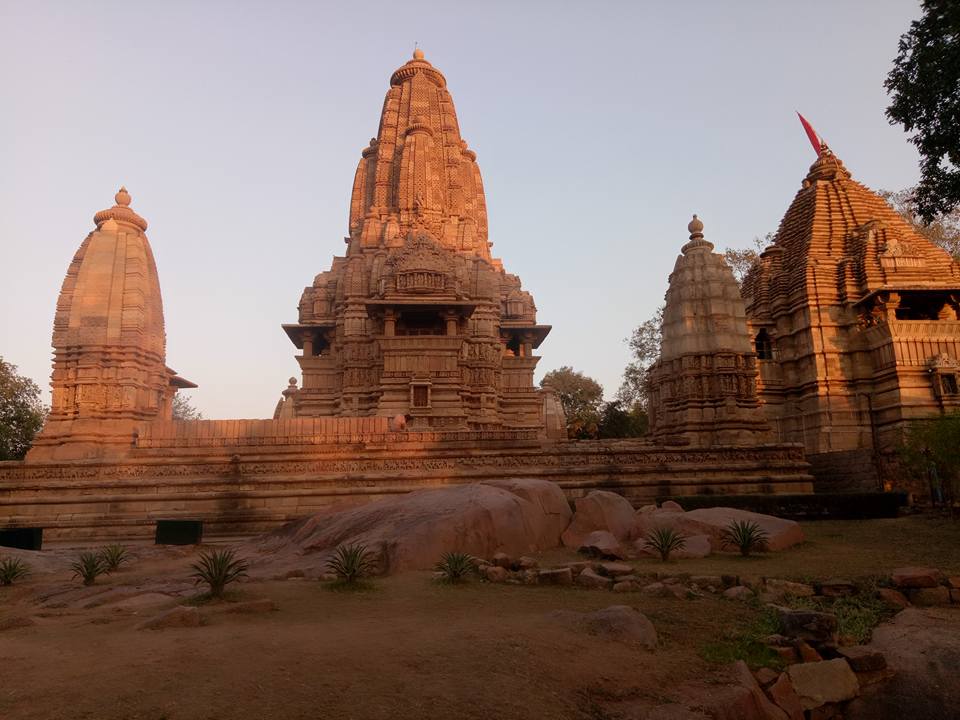
Bandhavgarh is one of the most picturesque tiger havens in India and is home to ancient tribal architecture. The zoomorphic idols of Lord Vishnu, Fort in ruins, Man-made caves, horse stables and shelter, courtrooms, Hindu temples, reservoirs, and dome-shaped shelters date back to more than two thousand years. The Fort finds are mentioned in ancient Hindu annals chiefly in Skand Purana.

The fort complex witnessed internecine battles that led to conquests and subsequent rules by many dynasties. The Baghels were the last rulers before they shifted their capital to the Rewa District. Tiger rules the fort complex now, and the grove at Shesh Shaiyya inundated by trickles from the looming Bandhavgarh Hill is an enchanting spectacle with the twenty feet statue of reclining Vishnu beside a fairy pool. 

The White Tiger Land

Mohun the world's first and only white tiger was found in Sanjay Dubri National Park. Barley over an hour's drive from Bandhavgarh the park is home to a number of big cats and the number is on the increase.

Tourism at Sanjay Dubri is at a nascent stage but the park holds promise as it is extended into the neighboring state of  Chhattisgarh. The jungles comprise a large area for breeding big cats. The white cubs grew up under the care of Maharajah of Rewa HH Martandsinghji at Govindgarh Palace in Rewa. The white predator multiplied in zoos all over the world and it survives in captivity.

The Protected Areas

This region constitutes one of the finest tiger landscapes in India. Untouched and unspoiled for centuries this large tract of forest stands fragmented today. Well-preserved isolated patches have been designated PAs or protected areas. Most of these PAs have been constituted lawfully as tiger reserves.   


The Maikal Hills at Amarkantak incidentally is where River Narmada originates besides Son. Son moves towards the Ganges basin and merges into the Ganges River. Narmada traverses almost seven hundred kilometers to merge into the Arabian Ocean at Bharuch in Gujarat.


Throughout its journey, Narmada flows between amazing geological formations the forest-clad hills and valleys, and between some magnificent gorges like Bhedaghat in Jabalpur in Madhya Pradesh. Once the lifeline of contiguous forests, Narmada and its tributaries now inundate fragmented forests in the Highlands of Central India. 

Pachmarhi & Satpura Tiger Reserve

The Hill Resort Pachmarhi and Satpura Tiger Reserve too are part of these magnificent hill ranges and are home to the big cats as well. The forest-clad hills make Madhya Pradesh the most forested in India as the Tiger State.  Amarkantak Bio Reserve and Satpura Bio Reserve constitute a large area covering sanctuaries and reserves that is accorded protection from commercial interests. These are an incredible hub of diversity and habitats of some of the unique flora and fauna in Central India.   


Highlands of Central India

These highlands' once-perfect ecosystems teeming with wildlife have been vividly described by Capt. Forsyth in his book named “Highlands Of Central India”. He was a pioneer in discovering many geological formations and wilderness that prevail during his time. His notes on the wild animals stand out as remarkable records of natural history. Much still remains fragmented but well preserved. Bandhavgarh, Achanakmar, Kanha, and Pench are the prime tiger reserves that have been turned into protected areas for tiger conservation. Pench and Kanha once contiguous were the settings for Kipling’s Jungle Book a story of Mowgli the wolf child. This is a wonderful tale woven by Kipling creating a classic using both facts and fiction.  


The majestic animals still roam in the reserves albeit in reduced numbers, and the panoramic features described by Forsyth can still be witnessed here albeit in bits and pieces. Much subjected to biotic and abiotic pressures the reserves are holding grounds thanks to the management and the conservative initiatives supported by Madhya Pradesh And Central Governments under the aegis of Project Tiger Program. 


The Big Cats Tours

Tigers are the prime attraction and the keystone species of these realms. Their numbers after years of depredation are thankfully increasing year on year. This is attracting a lot of wildlife enthusiasts, photographers, and filmmakers to visit the reserves on safari and expeditions. Holidaymakers make a beeline for these destinations in Central India for safari holidays. The main attraction is the tiger but the biodiversity supports enchanting mammals, birds, reptiles, and insects. The floral diversity is extravagant with amazing botanical evolution and the tall stands of Sal and Teak are the main hardwood. The mixed forest species and bamboo abound intermixed with the hardwood, shrubs, and herbs. 

The reserves support unique niche habitats and creatures that have lost ground in areas taken over by man for commercial forestry, settlement, and agriculture. One of the most important biodiversity hubs a part of Satpura Biosphere Reserve is Pachmarhi Wildlife Sanctuary home to incredible species of herbs and shrubs that are classified as flora of medicinal importance.  Incidentally, Pachmarhi is a holiday destination due to its panoramic surroundings, amazing natural formations, and salubrious climate.

While Bandhavgarh, Kanha, and Pench National Parks are most visited due to easier sightings of the tiger Satpura excels in biodiversity and pristine forests. Satpura Tiger Reserve encompasses Bori Wildlife Sanctuary which is home to the finest teak forests in Central India. The population of big cats is increasing in these wild havens thanks to the protection accorded and the conservative initiatives. 

Sanjay Dubri though at a nascent stage as far as tourism is concerned is an upcoming National Park bound to become popular due to its proximity to Bandhavgarh, Allahabad, and Varanasi in Uttar Pradesh.


Thus Central Indian Highlands are the focus of big cat tours in the State of Madhya Pradesh. The popular reserves are Bandhavgarh, Kanha, Pench, and Satpura. These tours can be extended further to other reserves near and far.              


Wednesday, June 3, 2020

Kanha National Park A Tiger Photographer's Delight!

The majestic beast lay stretched on the jungle road, rather half of its massive frame was on the path under the direct sun, and the rear end was under the shadow of the bush. Excited, I made a near fatal error and persisted. 


We had inched a shade too close to the massive beast as I delivered sermon to unassuming but nevertheless excited guests. I have never seen a tiger in my life one of the guest had informed me as we crossed over into the park. I wish for lot of photographs he had informed me on our first meeting at Courtyard House in Kanha. As a naturalist I expect you to deliver.      


And here was one lying right in front, unassuming and not at all threatening. Extolling the virtue of this majestic beast that lives in the myths and dreams alike, I was immersed in the dialogue and failed to notice the  twitch. The next whence I looked at him straight I noticed the warning....it was too late. 

It was all over in seconds. How could a beast so huge lift himself effortlessly and strike with lightning speed simply defies the law of gravitation? All I could see was a massive flash of yellow passing in front of the jeep and a deafening roar which still rings. The trepidation was instant and I was wobbly all over. 

"Reverse!"  

Fear writ large on my countenance! The tiger could have with one swift strike aimed right taken slabs of meat from my body. "A few kilos..." was all I could hear from the guide as pandemonium struck and we backed off. Or he could have wrenched my head off...I began to surmise the worst, pacified by the increasing distance from the beast in the bush. 

Some lovely images my guest who had never seen a tiger in his life remarked. "I would like some more photos! Totally out my senses I could but just stare at him. Unbelievable. He sat calm and composed a camera with a huge lens on his lap. 

Mukul Yadav
"I am sorry the big cat is not used to humans and the jeep. We will stay away." After some time we tried to return on the guest's insistence but the following jeeps warned us to stay away. Rightly so.  

I was totally unnerved. Well it happens you learn from mistake, never venture close to big cats without gauging their temperament. Like a gentlemen the beast did not harm me and was satisfied with the warning. For some time the new entrant charged on number of jeeps till he got used to the introduction. He had arrived from a non tourist zone and had not seen the jeep before. 


There is another similar incident but for later...    

With right guidance a photographer has ample opportunity to film or capture images of this magnificent predator at Kanha National Park. There are more than hundred tigers in the park. Before you begin to consider this animal as commoner loitering on the wilderness infested pathways you must know these big cats are most elusive. This is the character of the beast and requires lot of logic to track them. They are a challenge to your sensory apparatus and understanding of behaviour and your patience.   

Safari Jeeps

In the torturous terrain of deep glens, tall grass, a cryptic maze of vegetation and dense forests the big cats find easy camouflage and space to hide. Tiger tracking could often be frustrating experience for the guests and the naturalist as well. That is the character of this animal.  

Rare and endangered, it is flourishing at Kanha. Year on year visitor numbers are increasing on quest for the magnificent beast. A large chunk of wildlife photographers arrive here at the tiger reserve to capture award winning images. 

Male Tiger (Paul Fear)

Kanha's tiger  landscape is a paradise with panoramic settings, frequent tiger sightings and exciting adventures. Amazing variations in light conditions are available to enhance effects in all seasons with equally striking backdrops. The destination is well suited for photography and film making in India. The efforts have to be made within rules and regulations set for safaris on open jeeps in the park. For going beyond the rules for photography/film making one needs to have permission from MOEF India and PCCF of Madhya Pradesh. 

Courtyard House Kanha

The park is well endowed with tourism infrastructure and accessibility and accommodation is good. For booking tiger safari at Kanha you need to plan in advance. There is a limit to entry in the core zone of the park hence book permits in advance.   For tiger photography long lenses are not required but it is a matter of choice, in my opinion 300mm critical focusing lens with bean bag is enough. An option of full day safari is also available which though costly suits the lensmen very well. 
=======================================
Uday works as freelance naturalist at Kanha. He also provides SEO Service and website contents in English. Uday is a blogger and loves to write on tiger conservation, environment and wildlife in general. Uday teaches Internet Marketing in Summer Holidays.

Contact: pateluday90@hotmail.com
09755089323

Friday, May 29, 2020

Add A Healing Touch to Post Pandemic Resort Experience

Post-Covid Hospitality & Travel

Be it a tiger safari, sightseeing, or cultural experience the visitors expect a lot. Yes, a lot of warmth and care, and in post-covid-19 travel, a lot of hygiene and SOPs are in place. Whether it is a budget lodge or a high-end resort the new normal is to prevent coronavirus infection.    


This calls for intense hygiene most of the premium hospitality businesses would feel offended by this statement. But believe me, this is hygiene with a difference it includes paraphernalia like masks and gloves. The thermal scanner is here to stay. As the new normal lays stress on hygiene, personal care cannot be neglected. Frequent bathing and regular hand washing with soap or sanitizer have become not a practice but an imperative. How can you as a resort staff keep the property clean & disinfected, and not self-cleanse often?


The lodges have been burdened with a lot of extras as regards chemicals, clothing, cleaning, and washing paraphernalia. The new normal may be a fun spoiler a bit if you experience the social distancing it imposes, and thus prevents get-togethers and partying...the feeling of being safe is itself exhilarating with the chances of infection peeking in from unknown quarters completely negated. 

Courtyard House Kanha
Those willing to wager travel in this period would be brave souls willing to leave the sanctity of their homes and experience the World like they did before. This is sort of a community initiative or lending a helping hand these are the clients who should be treated with hand in gloves literary speaking. They would expect greater warmth and care while the SOPs post-pandemic would be an assurance. They are here to revive the hotel industry.


Hence true travel professionals and accommodation providers would pay heed to this. In the post, covid hospitality paradigm disposal and scant use have become the norm. Although this goes against the principles of economic use, prevention of infection from one guest to another is a practice that carries weight now. Greater.

Disposing of desk and bathroom accessories that cannot be cleaned or recycled has to be done without hesitation. This applies to all the paraphernalia that guests before departure may have come into contact.

The contact spaces with the reach of wandering guests, hosts, and staff need frequent sanitation using disinfectant. The luxury suite, or rooms, bathrooms, balconies, sit-outs, and passages all need to be disinfected frequently. Even the library books and reading tables need a dose of disinfectant. There are lots of chemicals that are going to be used. This use of chemicals is not a good or Eco-friendly new normal, but as long as the contingency prevails that practice remains.


Travelers not in groups will have to be kept at a distance at the coffee table and dining. Even during safari or excursion sharing cannot be possible. The guest distancing norms are set as post pandemic SOPs but the imperative lies with the guests themselves.


Organizing the best stay experience which is sound and safe is the way forward now. Offering the best thrills and frills during the heritage or nature experience is imperative for successful operations. Deliver the best to the guests not only for a perfect holiday but for their social media content and memories that will last a lifetime.
===================================================
Uday is a naturalist, and a writer, and loves to blog on travel and wildlife.
He provides SEO Services and Website Content in English.
He Teaches Internet Marketing in Jabalpur in Summer
Contact: pateluday90@hotmail.com
09755089323

Thursday, May 14, 2020

Post Covid - 19 : Changing Dynamics of Travel

With the horrendous incidence of Covid 19 intrusion the whole travel paradigm has changed. With the widespread occurrence of this malicious virus we are changing all aspects of our lives. The impact is furious not only the deaths that have occurred but the damage it has caused to the economy by virtually bringing our movement, our enterprises and our profession to a screeching halt. 

All aspects of our lives have come to a standstill and Governments are in a frenzy to get activities rolling back without endangering the populations. Travel and tourism have been badly hit including in India. Few holiday destination have been spared from this widespread distress and they too are reeling under the pressure of transport ban, closures and lock downs all across the globe. 


Ecotourism in India is the biggest sufferer with all tiger reserves and National Parks closed for this season. The future seems bleak with hesitation to reopen destination amidst the raging corona virus is obvious.  

Cornovirus is here stay for long as most of the scientific fraternity perceives. This means we will have to learn to live and still continue with travel and tourism activities. As the lock down rolls downhill and the World opens up a paradigm shift has to be in picture. No longer can we move around in holiday places with absolute freedom.

The World can never remain locked down forever or the economy will come to a complete stand still and hunger and joblessness would be as vitiating as the virus itself. Hence a middle path will have to be found and it is already happening as the World begins to move. A new lifestyle will be in place and the behavioral code  would change as well. Face mask, distancing, keeping away from strangers, restaurant etiquette, transportation norms all will change.   

There would be no hugs no embraces no kissing only a silent nod or Namaste!  

For resort vacation there would definitely be changes in accommodation norms and guest conduct on a stay. These would be applicable to the places of interest as well. All this will increase visitation time due to cautious approach at the places of interest. 

Tiger reserves will conduct safari under stringent norms keeping social distancing in mind. Many reserves will conduct screening or testing as a regular practice. This would be cumbersome but a necessity.

The greatest fear in the reserves would be infection passing off to the big cats or other endangered animals. This of course would be a rare occurrence since jeeps do maintain a distance from the animals during the game ride in the park. 

Global airlines would be most restricted and perhaps they will not load to full capacity keeping social distancing in mind. The boarding time would increase with extensive screening and testing. The exit would also be tardy with new rules and regulations taking place. This would increase the cost travel and limit availability of seats.

Overseas visitors would prefer to travel by air than by rail in India as the services would be restricted with lots of cumbersome rules and regulation. The idea of being holed up in a coach with a hundred passengers on an overnight journey does not sound very appealing anyway.

Taxi rides would not be much of a bother as long as few people travel and the driver is tested regularly.

Well all these will last till a cure or a vaccine arrives but this is not going to happen very soon. Hence if you are a travel enthusiast then  embrace yourself for myriad of changes that will come into picture. All the rules and regulations would discourage many would be tourists, and the destinations would in want off business. 

Would the World of travel become better with less people participating?  Would ecosystems improve? Will wild be less stressed? All this will become clear as time proceeds but certainly Covid-19 is not welcome.   

Sunday, April 26, 2020

Jabalpur to Kanha Via Mandla - Road To Tiger Heaven

The Journey on Road to Mandla

The jerks and bumps are unbearable and the ride long. These are the travails of a bus journey  to Kanha.  Who cares? I am going to the tiger heaven.

Mandla Fields

Jabalpur to Mandla Road is being built since ages, and I am used to the rough patches that arrive intermittently but with a stressful certainty. The sight of broken culverts, rocks and gravel and piles of sand alert you in advance as to what is about to come. The terrible jerks. OOf!

The crowd inside is bone crushing, and my lungs heave as bodies pile up on me whenever the bus vacillates on the rough patches. The beautiful landscape is a solace as the bus moves forward painstakingly on a non existing road. 

Banzar River

I sit tight on a badly designed seat that could challenge the best of the designers to rectify. You can see the cushion rotting, brittle, yellowed by age as it peers through the jagged edges.  

The whole picture is that of absurdity since the rattle is called a luxury bus. 

It stops every now and then to pick roadside passengers, some in small groups. The conductor pushes them all inside to the back where there is no space. They are duped easily, the rustic rural populace. 

"Go back there are empty seats behind" his standard speak every time he loads the bus. There are none, the travellers are mercilessly cramped up in the little suffocating passage between the rows of the seats - two on left and three rows on the right. 

Kanha Village

I am lucky for being on seat with kids beside who barely occupy much. In summers it gets worse with heat insulated between those on board and windows too small to let fresh air in. Anyway it gets too dusty hence people keep the windows closed most of the time. 

When I look outside, I see no work going on. The idle machinery - caterpillars and road rollers tell a sad story of indefinite delays in Government managed projects. This means more such horrible experience till the highway is eventually complete. The finished patches in between are like a breath of fresh air and future travel seems promising on the cement structure that will let ply the vehicles to and forth. Bus rolls smoothly as if on a rink...too difficult to believe.  Then the next patch awakens you out of the reviere. 

Mandla Village

The journey over unfinished patches is an absolute shock, and tests my body whence catapulted towards the roof and back onto the seat. Thanks to a long association with this road to Mandla, I have gained expertise in twisting and turning on time, and using these very acrobatic skills I always land back safely on the seat - me and my laptop and yes the baggage. But nobody is perfect many a times my goggles and hat are thrown astray and crushed under the unruly impending feet. They are all around. 

The bus stops for few minutes for refreshment at a market place called Narayanganj a small filthy town still living in the past. I go for tea and samosa from the roadside cart making sure they are hot. It is a hurried affair, the small shops well some of them selling eatables pass on adulterated stuff since there would be no fight back by unsatisfied customers due to lack of time. The toilet facilities are non existent, I hope they build some along with this new highway.     

After a hot cup of tea and samosas, I feel bit relaxed and this gives space to my cramped feet. In fact the stop is good to unwind my whole body ....crushed as it is.    

The bus journey ahead is as terrible and throws you into throes of convulsions. The twists and turns are more severe, and after frequent stoppages the bus is jam packed. The luxury bus I mean. There is no more halts worth their time only pick ups now and if you are feeling like it hold on tight.  The smell of edible lingers on for a long time in the cramped space of the rattle and an occasional burp  from the passenger smells like a bad fart! 

The journey is nevertheless amusing with wide variety of crowd that has mingled inside in perfect harmony. In India it is the crowded places that open up the region's culture. You learn how people carry on in adversity unbearable. I do not experience the World when I travel to Kanha National Park in a luxury SUV! All I experience is sleep and little shop talk with my clients...those which land at Jabalpur Airport. 

Mandla Township

After what seems an eternity full of bone breaking experience I land, lock, stock and barrel in one mutilated piece after three hours and run to the next bus. Sometimes the connecting bus to Kanha is late, and I get time to freshen up and for a cuppa chai!

Courtyard House Kanha

The journey to Kanha from Mandla onwards appears to be luxurious whence compared with the earlier one. Yet it is a painfully slow journey with innumerable halts. Eventually I reach Mocha township in the buffer from where I am picked up to take me to Courtyard House Kanha wildlife resort at Patpara Village. This is a high end property and I will get the much needed rest. I freelance here as a naturalist in the tiger heaven and love my work immensely. 

Bus ride anyone? 
===================================================
Uday is naturalist, a writer and loves to blog on travel and wildlife.
He provides SEO Service and Website Contents in English.
He Teaches Internet Marketing in Jabalpur in Summer
Contact: pateluday90@hotmail.com
09755089323

Wednesday, March 18, 2020

Spending Interesting Time in Jabalpur

Jabalpur District 
Population: Approx 2 million 

The tropic of Capricorn transacts through Jabalpur in Madhya Pradesh. Situated in the Centre of India the agglomeration boasts of a unique profile albeit being the 26th largest town.
Madan Mahal Fort
Picturesque, small and sleepy is how this town was described in the past. It has a history that did not make much impact on the annals nevertheless the seat of Gond Kings who wagered with the Mughals, and it was part of the 1857 rebellion as well as the freedom struggle initiated by Mahatma Gandhi.

The game of snooker originated here at Narmada Club and the tables are still there. Famous actor Premnath was born here. The famous actor brothers Kishor Kumar, Anup Kumar, and Ashok Kumar studied in Robertson College.   

Historic Empire Building

T

Old Hotel in Jabalpur
Add caption

Dumna Reservoir
The city is more of a conduit for tiger reserves nearby. Hence many continue onwards without a halt. And miss boating at the splendorous Marble Rocks, Dhuandhar Falls, and Chousath Yogini with ancient idols. They also miss safari at Dumna Nature Reserve, picnic at Pariyat Lake, and Madan Mahal fortress that takes you back in time.
Dhuandhar Falls

Marble Rocks 
Narmada River at Jabalpur 
Visitors who stay for a long time can spend birding in its forest confines or simply laze around the magnificent Bargi Dam. More adventurous would ride a speed boat or take a tour on the cruise.

Much cherished by erstwhile British rulers for its cool weather, natural landscapes, and dense forests with plenty of game. They established operas, bakeries, and small hotels during their heydays for much-needed entertainment. A well-laid infrastructure in terms of defense manufacturing, cantonment, roads, railways, hospitals, and schools was their departing gift.

The opera houses turned into cinemas and entertained the dwellers for a long time. They still do but as more sophisticated E cinemas in the malls. Much before the business hotels arrived with their own desi flavors and modern facilities. Eating out at restaurants became a fashion followed by diving into chunky morsels of fast food joints.

Jabalpur City has a unique flavor and a truly cosmopolitan character. You cannot miss this if you stay for some time. Mega Bazaars and Malls have struck the lifestyle here as at the metros. The desi chaat, samosa, and masala dosa stalls abound for the more traditional. For the emerging jet sets reputed fast food joints, plush bars, pubs, and fine dining restaurants are the places. For those midway Indian Coffee Houses, ideal meeting places are spread all over.

Spas, gymnasiums for quick workouts, clubs, and whatnot are available. Must-visit places are the business hotels with star facilities, Anantara Pub, and the Clock Tower Chinese restaurant the hallmark of the town.

The fast-expanding city still retains vestiges of the colonial era, and age-old structures paint the town with a sober brush. Nevertheless, Jabalpur grows at its own pace retaining flavors old and new. On your next visit spend a day here.

More About Jabalpur City

Bandhavgarh Tiger Reserve a Veritable Paradise

Quaint and sublime, the forests of Bandhavgarh Tiger Reserve are a veritable paradise on Earth. Hidden deep inside in remote access of Central India - the park is an amazing biodiversity hub.

Known more for its tigers, one can experience India's enchanting wilderness at best here. Every year thousands of overseas and local visitors arrive here for a tiger safari.


The scattered ruins enhance the esoteric charm of Bandhavgarh suggesting history that dates back 2000 years. A game round takes you way back into a turbulent past of Maharajahs amidst teeming wildlife.

The diverse flora changes landscapes with startling fervor as you move into the bush country, dense forests, and rolling grasslands. The marshy landscape accord immense beauty and it is here that you can see the tiger in the wild.


Known for Sal (Shorea robusta) trees and the moist deciduous types abound along with mixed canopy. Though the reserve encompasses a large area of about eleven hundred km the tourism zone is restricted to four hundred plus km. This is a big enough window to peek into the magnificent wilderness.


Deer, bison, leopard, sloth bear, and wild dogs share the kingdom of magnificent tigers. Birds abound and are a treat to watch as they emerge from the dense canopy in resplendent attire. Bandhavgarh is a bird-watching hot spot in India sadly neglected and suppressed by the enigma of big cats. More than two hundred species can be sighted albeit in different seasons. Migrants arrive in winter and depart before the summer peaks.

The visitor profile changes with the seasons, and nature lovers and holidaymakers arrive in the winter and festive seasons. Wildlife photographers prefer extensive sunlight in the summer months despite the heat. The park is busy throughout but holidays and weekends should be avoided.


The fort is in ruins now, and out of bounds for the visitors but one must drive up to Sesh Shaiyya on the way. This is an enigmatic statue of Lord Visnu carved out of a twenty feet long igneous rock. The ensemble or ruins consisting of temples, stables, caves, and zoo-morphic idols enchant the visitors on a jeep safari.

The reserve is a National Park and a conservation unit, declared a protected area for saving the tiger from the brink of extinction. The efforts have been successful despite many hurdles. You can see the transformation yourself on safaris. Tigers and other mammals are sighted with a greater degree of frequency.

A set of rules apply for tourists which one must follow. A limited number of jeeps are allowed to enter the tourist zones every day. Hence you must book the entry in advance.

Located in the Umaria District of Madhya Pradesh, the connectivity for easy access is excellent. The nearest airport and rail hub is Jabalpur City. The drive from Jabalpur is about 175 km.

At this amazing Bandhavgarh Tiger Reserve, luxury hotels abound for accommodation. The tourism infrastructure is proper and a good degree of comfort prevails making the destination tourist-friendly. If you are planning a holiday in India do experience the exotic wilderness at its best
here.

Friday, July 5, 2019

Bandhavgarh Hidden Jewel of Central India

The peaks rise startlingly from the horizon as you drive towards Tala Village, an astounding view...and more has to come. Bandhavgarh is a land of surprises and a charismatic destination. An eerie feel hangs around, and chilly air of expectation runs down your spine, and your mind is in a state of fantasy. This is tiger land, India's primal forest home to many of these magnificent animals. 

Tiger
Encapsulating diverse habitats and amazing biodiversity the tiger reserve is also a National Park.  It is managed under the aegis of Project Tiger a GOI initiative. Situated in the remote confines of Central India or the State of Madhya Pradesh the tiger land keeps its promise. Expect a safari exciting and soul-stirring as never before experienced in the hinterlands of the long-stretching Vindhyan Mountain Ranges.  

Bandhavgarh Meadow

The reserve comprises marshy grasslands, dense Sal and mixed forests, bamboo slopes, and rivers that twist and turn agonizingly all over this ecosystem eventually draining out of the park into chaotic human civilizations.  

Jeep Safari
The salient feature of this paradise is the steep cliffs covered with dense canopy scarred with scarps and protruding spurs at many places. In between the cliffs, the safari vehicles move steeply uphill and then slide tortuously downhill in between the deep glens. The drive is strenuous with bumps and jerks, and negotiating sharp bends on the incline and slippery slopes tests the driver's skill no end.  

All this makes the safari exciting especially whence you climb up the hill at literally an obtuse angle. A chance meeting with a tiger and other exciting animals like the leopard, gaur, sloth bear, and wild dog is always on cards to keep the adrenalin pumping and the heart missing a few beats.  

Bandhavgarh Mountain

From the top of the mountains, the panoramic grandeur unfolds. The landscape changes correspondingly as the angle of view changes and your gaze is mesmerized. The tree tops, marshy grasslands, and surrounding cliffs with rivulets and pathways snaking in between are a sight to wonder at from the dizzy heights.       

A tiger safari at Bandhavgarh is truly stupefying and thrilling on an open jeep. The sightings of tigers and other megafauna are very high in this little paradise and tourists flock around the open season to film and photograph these amazing creatures, some of which are endangered and nearly on the verge of extinction. 

Bandhavgarh Tiger Reserve

Whence you enter the park from the Tala Gate across the meadows the steep cliff encapsulating the fort wall on the ascent and the Ram Janki Temple accords an exotic view. The distance plays around with dimensions and the ancient temple appears as a tiny speck.  

In midst of pristine forests, the telltale signs of human architecture is an esoteric experience. The stone wall stretches long for more than a mile and was used to prevent intrusion into the Gond Fort at the height of 800 MSL. This hill is named after the reserve and is the tallest.  

In the Tala Zone at Sesh Shaiyya or reclining Vishnu time stands absolutely still. After an unnerving climb up the hill, the twenty feet idol lying adjacent to an ancient pool shaded by a grove is a mesmerizing sight. The grove shelters the pool and the idol trickles like a misty curtain flowing down the walls covered with ferns and shrubs. The curtain of tiny falls literally sliding down towards the idol through eroded walls covered with a slippery carpet of moss and lichens extols the creativity of ancient tribes it enhances the age of the edifice which could be around two thousand years ago. The situation is a fairy tale setting, and cool brisk air from the grove invites slumber even in the torturous heat of the summer.   


Silence and serenity prevail transporting you back in time, a moment whence a troupe of soldiers came to rest here before climbing up to the fort. The intruding roar of the tiger awakens you from a fantasy daydream and fetches you back into the reality of the contemporary. 


The climb up to the fort passes through numerous horse shelters, courtrooms, and caves entrenched in the mountain wall. The grand stone arch after a strenuous climb is welcoming, from here you enter the fort complex. The fort itself is in ruins but the zoomorphic idols of Lord Vishnu are spectacular and well-preserved. So are the huge reservoirs meant to sustain the large entourage of soldiers and royal households.    

Langur Monkey
The large vacant spaces also contain numerous ancient architects in form of run-down structures. On one end as you climb up, the temple manned by old priests sits isolated but accords a magnificent view of the whole reserve.  

The whole park is an ecosystem that supports more than fifty tigers and they can be seen during the safari in the tourism zones. Herds of Gaur or bison and chital can be seen in the company of langur monkeys, sambar, and the peacock in the grasslands. 

Hindu Priest
The leopard is elusive but is seen often along with the sloth bear and the wild dog. Barking deer and saunders of wild boar are often encountered near the waterholes. In open areas herds of Nilgai antelope can be seen peacefully grazing in the grasslands. 

Tiger safaris are organized during the day and in the evening. Tourists can also book full-day safaris especially wildlife photographers.  

The best way to reach Bandhavgarh tiger park is via Jabalpur Airport which is a four hours drive, and also from Kanha Nationa Park which is a more five hour's drive. Overseas visitors should book the holiday through the tour operators and opt for the jungle plan which is all-inclusive.